
Visa Guide · Updated June 2026
56 Countries. Zero Advance Visa.
The complete 2026 guide to where Indian passport holders can travel without pre-arranging a visa — with exact fees, stay limits, and four corrections that most guides get wrong.
India's passport climbed to 75th on the Henley Passport Index in 2026 — up from 85th in 2025. That's 56 countries reachable without arranging a visa in advance. But four things changed significantly since 2025, and most guides haven't caught up. Read this before you book.
Visa-Free vs Visa on Arrival: Not the Same Thing
Visa-Free
- ·No visa stamp or fee — land and pass through immigration
- ·Examples: Malaysia, Qatar, Mauritius, Philippines, Fiji
- ·Still need: return ticket, hotel booking, bank statement
Visa on Arrival
- ✓Stamp issued when you land — no advance application
- ✓Fee paid at airport in cash: typically USD 25–50
- ✓Examples: Thailand (THB 2,000), Indonesia (USD 30), Cambodia (USD 30)
- ✓Queue adds 30–60 minutes at busy airports during peak season
Neither term means "no documentation." Immigration officers can deny entry regardless of visa status. The documents you carry — not just your visa category — determine how smooth the process is.
e-Visa is a third category, not counted in Henley's 56-destination figure: apply online before travel (approved in 24–72 hours), download your approval. Vietnam, Sri Lanka, and Saudi Arabia work this way. They require planning but are straightforward.
Southeast Asia
The most accessible region for Indian travellers, with genuinely cheap flights from every major Indian airport. Two significant changes happened here in 2026.
Malaysia
Free entry. Register via the MDAC digital arrival card at mdac.imi.gov.my before you fly — takes 5 minutes. Valid through December 2026.
Thailand
Thailand ended its 60-day visa-free program in May 2026. Now: THB 2,000 (approx. Rs. 4,800) in cash at the airport. Apply for an e-Visa in advance to skip the queue.
Indonesia
USD 30 (approx. Rs. 2,520) at all international airports including Bali and Jakarta. Extendable for another 30 days at the immigration office.
Philippines
Free entry, no paperwork. Bring a return or onward ticket — Manila immigration asks for it. Extendable within the country.
Cambodia
USD 30 (approx. Rs. 2,520) at Phnom Penh and Siem Reap. Apply via e-Visa at evisa.gov.kh to skip the VOA queue.
Vietnam
USD 25 (approx. Rs. 2,100) at evisa.xuatnhapcanh.gov.vn. Usually approved in 3 working days. Single or multiple entry.
⚠ Singapore requires a visa — most guides still say otherwise
Nepal and Bhutan: Indians can enter Nepal without any visa, using a valid passport, Aadhaar card, or voter ID. Bhutan is visa-free for Indians — but charges a Sustainable Development Fee of USD 100/day (approx. Rs. 8,400), which covers the accommodation levy.
For flights to Bangkok, Bali, or Kuala Lumpur from Indian metros, Wingit regularly finds fares 15% or more below the benchmark price. Check current deals on these routes before you plan.

Middle East
Mixed picture — Qatar is the standout, UAE is widely misunderstood, and Saudi Arabia is easier than most people think.
Qatar
Free entry, extendable to 60 days. Book accommodation through Discover Qatar — immigration sometimes checks. Doha stopover on a long-haul is genuinely worth it.
Maldives
Free at the airport. Return ticket and USD 200+ in funds or bank statement required. One of the easiest borders in the world for Indians.
Jordan
JOD 40 (approx. Rs. 4,760) at Queen Alia Airport. Buy Jordan Pass online (JOD 70–80) before arrival — covers visa fee plus Petra entry, saving Rs. 3,000+.
⚠ UAE visa on arrival — most Indians do not qualify
Saudi Arabia offers an e-Visa for Indian nationals: USD 135 (approx. Rs. 11,340), valid 1 year, multiple entry. Apply at visa.visitsaudi.com — approved within 24 hours in most cases.
Africa and the Pacific
Africa has more visa-friendly options for Indians than most guides cover. The Pacific is largely accessible but involves long flights.
Africa highlights: Mauritius (visa-free, 90 days, free), Seychelles (VOA, free, 90 days), Rwanda (visa-free, 30 days), Tanzania (VOA USD 50, 90 days), Kenya (VOA USD 32.50, 90 days). Ethiopia (VOA USD 82, Addis Ababa only) is a key transit hub — many Indian-to-Africa routes connect through Addis.
Pacific highlights: Fiji is the standout — visa-free for 120 days. Vanuatu, Micronesia, Cook Islands, and Niue all offer visa-free access for 30–90 days. These make most sense paired with a Southeast Asia stopover given the long flight times from India.
Destinations that require a full advance visa from India: Australia (6–8 weeks, AUD 150), New Zealand (ETA, immediate, NZD 17), UK (3–8 weeks, GBP 115), USA (B1/B2, 3–12 months), Canada (4–8 weeks), and all 26 Schengen countries (applied through the embassy of your primary destination, 3–8 weeks).
For a detailed cost breakdown of Dubai specifically, see the full budget guide here with exact daily numbers.
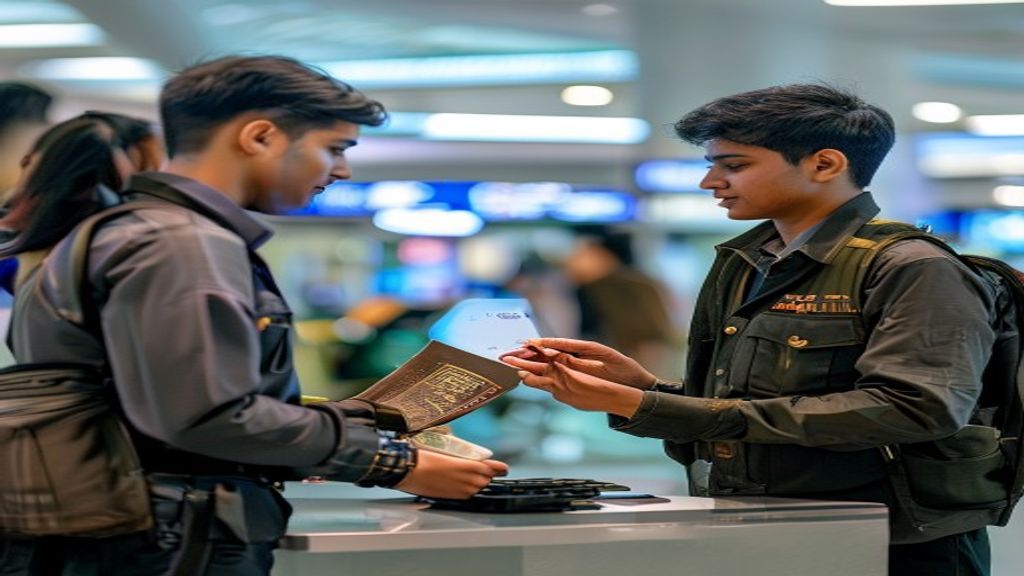
The Documents to Carry for Any Border
6 Documents for a Smooth Entry — Every Time
Passport with 6+ months validity beyond your return date
Airlines deny boarding if your passport expires within 6 months of return — they check at check-in, not just at immigration. Renew early. Indian passport renewal takes 4–6 weeks through Passport Seva; urgent processing is 1–3 days at the Passport Seva Kendra.
Return or onward ticket — printed or clearly accessible
Most immigration desks and airline check-in counters ask for this. A confirmed hotel booking and onward flight are the two documents that satisfy almost every border officer in the world.
Hotel booking confirmation with full address
Even for visa-free countries. Thailand, Bali, and Manila immigration are strict about this. If staying with friends, have their full address and contact number written down.
Bank statement showing sufficient funds
Last 3 months, printed and stamped by your bank. The standard is USD 50–100 per day of intended stay. A printed statement is more convincing than showing a banking app screen.
Travel insurance documentation
Not mandatory for most visa-free destinations but required for all European countries (minimum EUR 30,000 coverage) and some African nations. Costs Rs. 500–2,000 for a week of international coverage.
Cash in USD for visa on arrival countries
Thailand, Indonesia, Cambodia, Jordan, and most African VOA desks accept only USD cash (sometimes local currency). Carry USD 100–200 in small bills. Airport ATMs in these countries often have limits or long queues on arrival.
Common Mistakes That Get Indians Turned Back
4 Mistakes That Cost Indian Travellers Their Trip
Assuming visa-free means no documents needed
The most common mistake. Visa-free just means no visa stamp — it does not waive immigration checks. Travellers are denied boarding at Indian airports every week because they have no return ticket, no hotel booking, or insufficient bank statements. Carry all six documents above, without exception.
Not checking passport validity before booking
Six months validity beyond return date is the standard. A passport expiring in 4 months will get you denied for any international flight. The airline checks at check-in, not just at immigration. Indian passport renewal takes 4–6 weeks — start early.
Trusting outdated information about Singapore or Thailand
Singapore has never been visa-free for Indians. Thailand was visa-free from July 2024 to May 2026 then switched back to VOA. These changes happen with little fanfare. Always check the official embassy website or India's MEA travel advisories before buying a non-refundable ticket.
Assuming UAE visa on arrival applies to them
UAE visa on arrival requires a valid third-country visa from the US, UK, EU, or other qualifying countries. Most Indian travellers do not have one. Without a pre-approved UAE visa, you will not be allowed to board. Arrange it 5–7 days in advance through your airline or a licensed agent.
Frequently Asked Questions
56 countries, according to the Henley Passport Index 2026 (visa-free and visa-on-arrival access combined). If you include e-visa destinations where you apply online and are approved in 24–72 hours, the number rises to approximately 90. India ranked 75th globally in 2026, up from 85th in 2025.
No. Singapore requires a tourist visa for Indian passport holders. The fee is SGD 30 (approximately Rs. 1,900) applied through ICA or a licensed agent in advance. Processing takes 3 to 5 working days. Singapore has never been on the visa-free list for Indians — this is one of the most widely repeated errors in travel guides.
No longer. Thailand ended its 60-day visa-free program for Indian nationals in May 2026, citing overstays. Indians now need a visa on arrival for 15 days, costing THB 2,000 (approximately Rs. 4,800), paid in cash at the airport. You can also apply for a Thailand e-Visa at thaievisa.go.th to avoid the on-arrival queue.
Most Indians do. UAE offers visa on arrival only to Indians who hold a currently valid visa from the US, UK, EU, Australia, Canada, Japan, New Zealand, Singapore, South Korea, or China. Without one of those, you need a pre-approved UAE tourist visa through a travel agent or airline, typically costing AED 350 to 500 (approximately Rs. 8,000 to 11,500) with 3 to 5 working days processing.
True no-fee, no-advance-application destinations for Indians include Malaysia (30 days), Philippines (30 days), Mauritius (90 days), Qatar (30 days), Nepal (unlimited, Aadhaar accepted), Bhutan (visa-free but USD 100 per day tourism levy), Maldives (VOA, free), Seychelles (VOA, free), Fiji (120 days), Jamaica (30 days), and Barbados (90 days). Southeast Asia and the Indian Ocean offer the most genuinely free access.
Four major changes: Malaysia moved to 30-day visa-free access. Thailand ended its visa-free program and switched to VOA (15 days, THB 2,000). Iran suspended its bilateral visa-free agreement in late 2025. The Gambia was re-added to the visa-free list. Singapore also raised its visa fee to SGD 30 in January 2026.
Never miss a deal
Flight prices to these destinations just dropped.
Wingit scans fares from 8 Indian airports 3 times daily and alerts you the moment prices fall 15% or more below the benchmark. Free forever — no subscriptions.
Updated June 2026. Visa rules change without notice — verify current requirements at the official embassy website or India's MEA travel advisory portal before booking. Prices shown in local currency — use Google or xe.com for current INR conversion.
Related: How Wingit finds flight deals · Bangkok first-timer guide for Indians